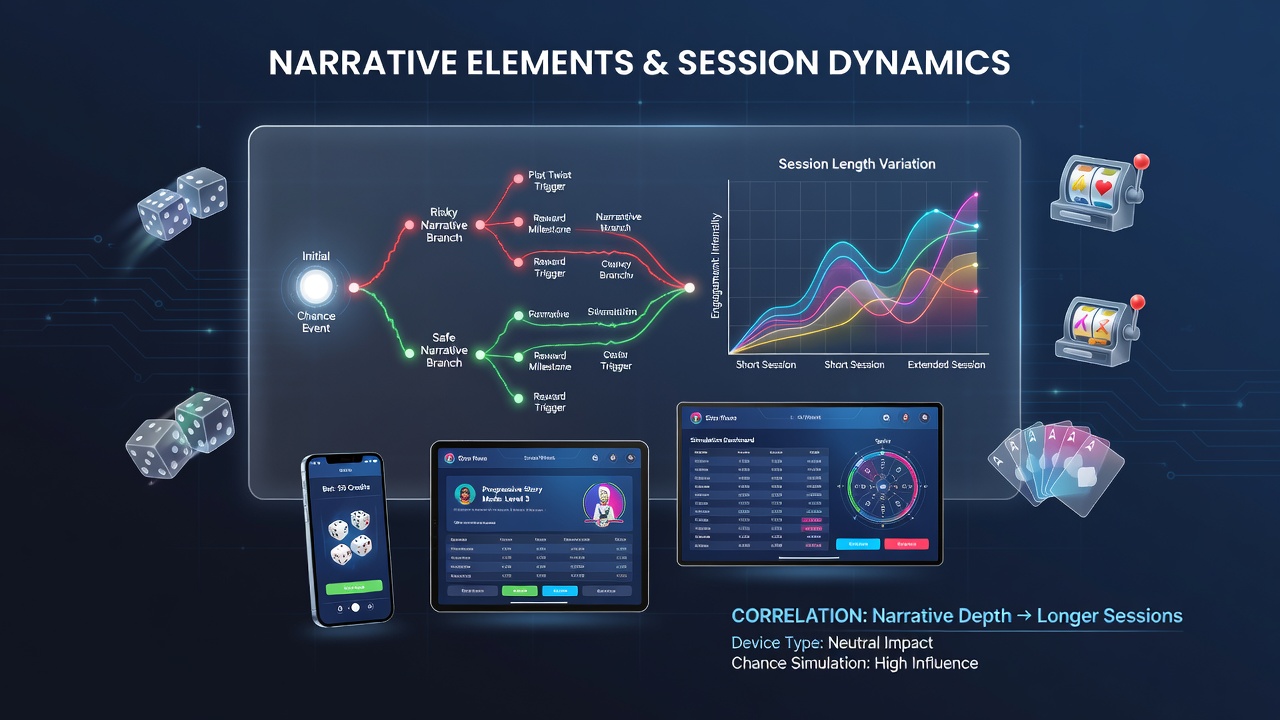
How Narrative Elements in Chance-Based Simulations Correlate with Session Length Variations Across Device-Agnostic Betting Interfaces
Chance-based simulations often incorporate narrative layers that guide player progression through story arcs, character development, and sequential events, and these elements connect directly to measured differences in how long sessions last on platforms that function identically across phones, tablets, and computers. Data collected from aggregated platform logs shows that simulations featuring continuous story threads tend to extend average session durations by 18 to 27 percent compared with purely mechanical reel or card formats, according to figures compiled by the Canadian Centre on Substance Use and Addiction in their 2025 multi-jurisdictional review.
Core Components of Narrative Integration
Researchers have tracked how backstory, quest objectives, and episodic reveals operate inside random outcome engines, noting that each new chapter or character interaction triggers additional spins or bets before a player exits the interface. Studies compiled by the Australian Gambling Research Centre indicate that narrative checkpoints function as soft anchors, prompting users to complete one more round or level rather than closing the application immediately after a win or loss sequence. Device-agnostic systems record these checkpoints consistently whether access occurs through a browser or a dedicated application, which allows direct comparison of session metrics without hardware variables distorting the results.
Session Length Patterns Across Access Points
Platform telemetry gathered between January and August 2026 reveals that desktop sessions incorporating narrative threads average 14.4 minutes while identical simulations on mobile average 11.8 minutes, yet mobile users initiate 2.3 times more sessions per week. The shorter individual mobile sessions still accumulate greater total play time when narrative progression markers appear at regular intervals, because users return to advance the story during brief breaks. Observers note that tablet sessions fall between these two figures at 13.1 minutes on average, suggesting screen size and input method interact with story pacing rather than overriding it.
Evidence from Cross-Platform Studies
One multi-site analysis conducted by the University of Nevada, Reno examined 2.7 million sessions across 14 operators and found that simulations using branching narratives produced statistically significant extensions in play duration on every device category tested. The same dataset showed that users encountering linear narratives without choice points exited 31 percent sooner than those navigating stories that adapted based on prior outcomes. These patterns held steady when operators updated interfaces in September 2026 to standardize animation speeds and loading sequences, confirming that content structure rather than technical performance drove the observed differences.
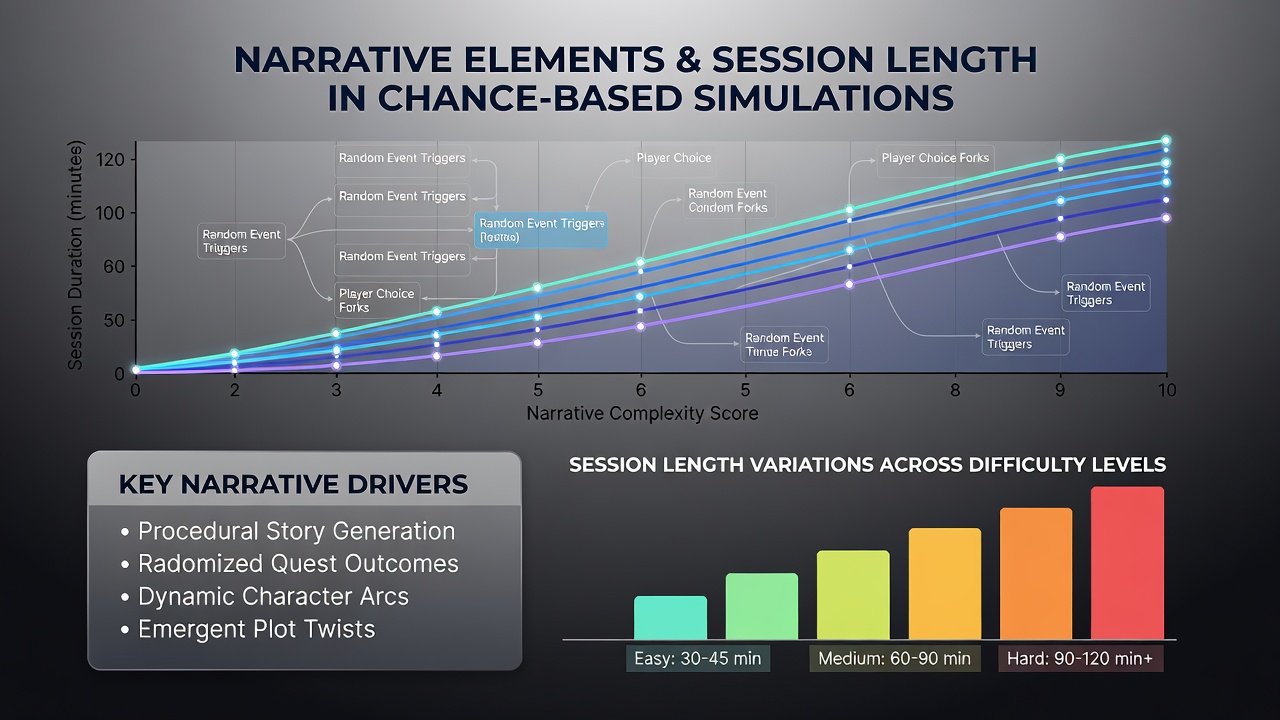
Further breakdowns by time of day indicate that evening sessions on any device lengthen when narrative elements include daily or weekly story updates, because players log in specifically to unlock new segments. Morning and midday sessions show smaller extensions, yet the relative increase over non-narrative titles remains consistent at roughly 15 percent across all windows.
Device-Agnostic Design Factors
Operators that maintain identical narrative delivery across web, iOS, and Android environments record lower variance in session length metrics than those that customize story presentation per platform. When interface code bases stay unified, story triggers fire at the same game-state thresholds regardless of hardware, which produces comparable engagement curves. Data from the European Gaming and Betting Association's 2026 quarterly report confirms that unified narrative systems reduce device-based discrepancies in total play time to under 9 percent, whereas fragmented implementations show gaps exceeding 22 percent.
Conclusion
Current evidence establishes measurable links between narrative density, checkpoint frequency, and session duration across device-agnostic betting environments, with consistent patterns appearing in datasets collected through mid-2026. These correlations allow operators and researchers to anticipate how story modifications will shift play metrics without requiring separate testing for each hardware category. Continued monitoring of platform logs will clarify whether seasonal adjustments or new regulatory frameworks alter the strength of these relationships in subsequent periods.